Watch Video: Connecting Salesforce to Jira
ZigiOps is a no-code integration platform that enables fast, reliable, and fully customizable two-way integration between Salesforce and Jira. Designed for ease of use, it allows even non-technical users to establish powerful workflows without writing code.
Key Features
- No-code setup: Configure integrations without any programming knowledge
- Pre-built templates: Quickly deploy common use cases with ready-to-use configurations
- Real-time, two-way sync: Ensures all updates are reflected instantly across both systems
- Full field mapping: Sync standard, custom, and lifecycle fields, including attachments and comments
- Support for all object types: Integrate any Salesforce object (standard, custom, external) with any Jira issue type (tasks, bugs, stories, epics)
- Custom logic and triggers: Define conditions, filters, and update logic with flexible expression builders
- Modular actions: Configure specific actions such as create, update, and sync for each system independently
Common Use Case
A Salesforce Case related to a technical issue is created. ZigiOps detects it and automatically creates a linked Jira Task for the development team. Any updates—status changes, comments, attachments—are synchronized in real time between the two systems, maintaining full data integrity and visibility across teams.
Integration Process
- Connect Systems: Use API credentials to securely link Jira and Salesforce
- Select Template: Choose from pre-built templates like “Salesforce Cases to Jira Tasks”
- Configure Mapping: Define which fields to sync, set triggers, and correlation logic
- Set Triggers and Actions: Use polling or event-based triggers to define when actions occur
- Deploy and Monitor: Activate the integration and track sync activity via the ZigiOps dashboard
ZigiOps supports complex workflows while keeping configuration simple and adaptable, making it an ideal solution for syncing support and development efforts between Salesforce and Jira.
See the complete setup details on our integration overview.
What we covered during the demo
After the intro and some details shared by Emily, Radoslav started the Jira to Salesforce integration demo with showcasing a bit of the ZigiOps UI, at 4:21.
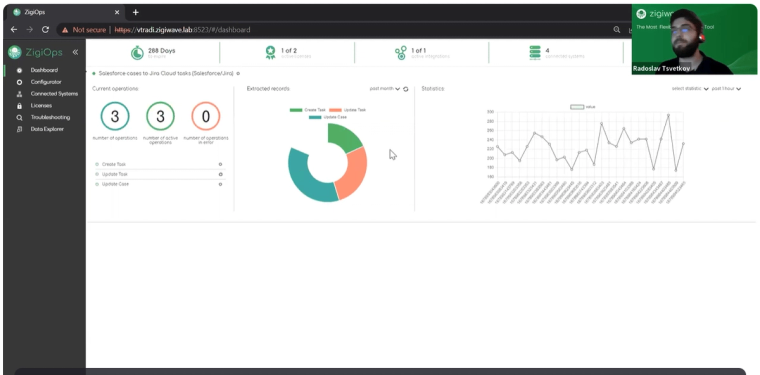
After that he explained the Salesforce Jira integration step-by-step, starting with the first step connecting your systems to ZigiOps at 4:49.
From the list of available systems:
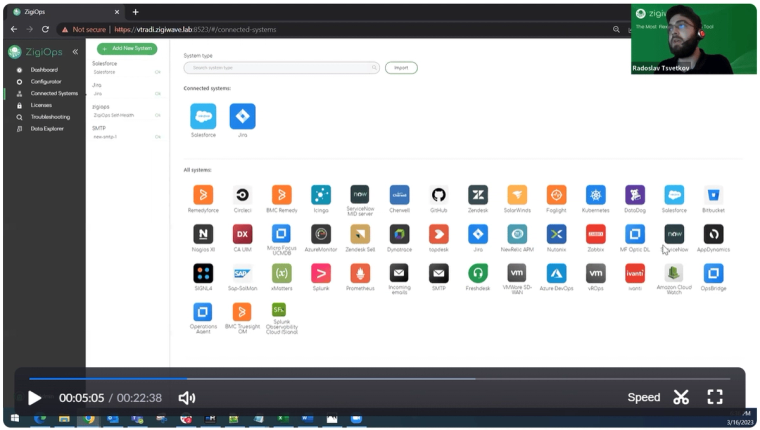
You can choose the ones you want to connect (in our case Salesforce and Jira) and just enter some authentication details, like username and password.
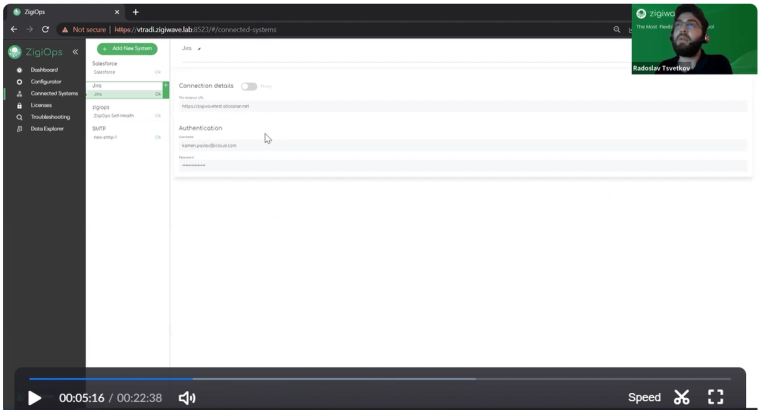
The connection is established via API. Once you enter your credentials, you just need to click Save, and then you can test if the connection is successful via the Test button. Voila, your systems are ready for Salesforce to Jira integration.
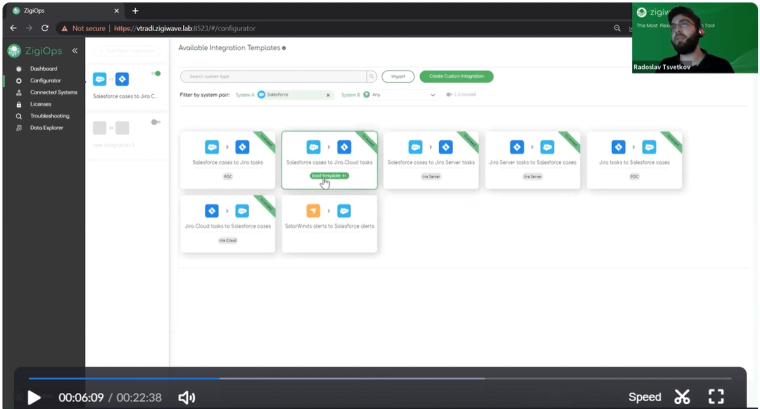
There are several ways to create and setup an integration in ZigiOps that Radoslav mentioned, from 5:43. Then the next step he showed was choosing an integration template that matches your needs. It is done easily through the Configurator menu. You click on Add new integration and you will see a list of all the available templates.
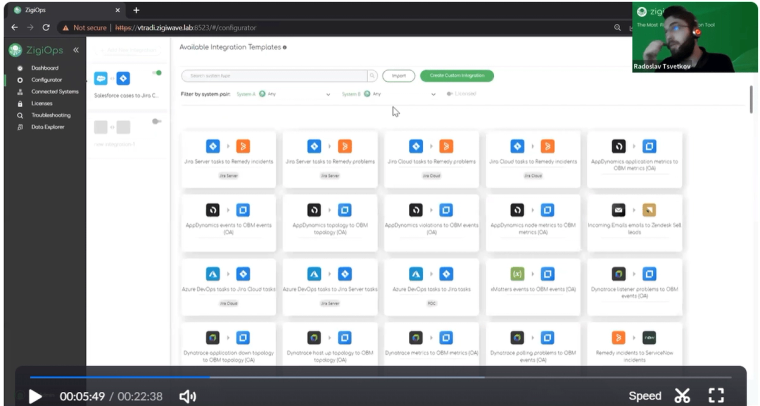
You can find the one you need and load it right away.
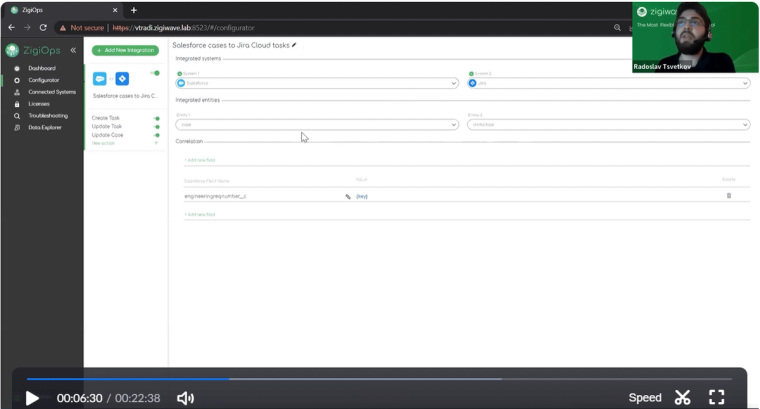
Then we saw how the initial setup of the Jira to Salesforce integration configuration is done, from 6:28.
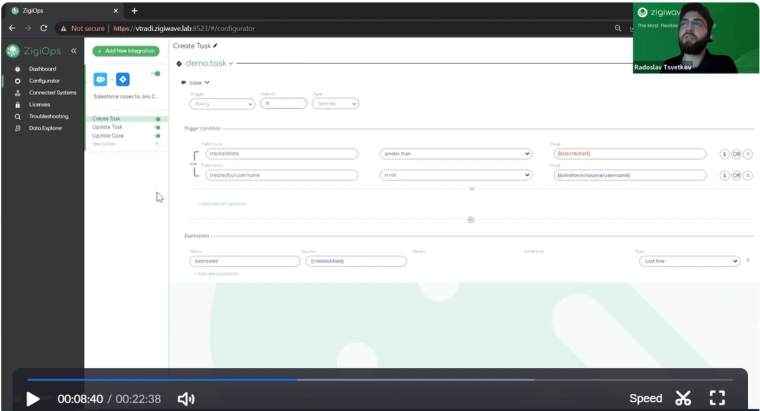
Next, Radoslav showed how the specific actions of the integration are set (from 8:12) the initial creation of Jira tasks, updating the Jira tasks when there are updates in Salesforce, and back syncing whenever there are updates in the Jira issues.
And once the setup in ZigiOps was finalized, Radoslav demoed how the Jira integration with Salesforce works in real time, from 11:53.
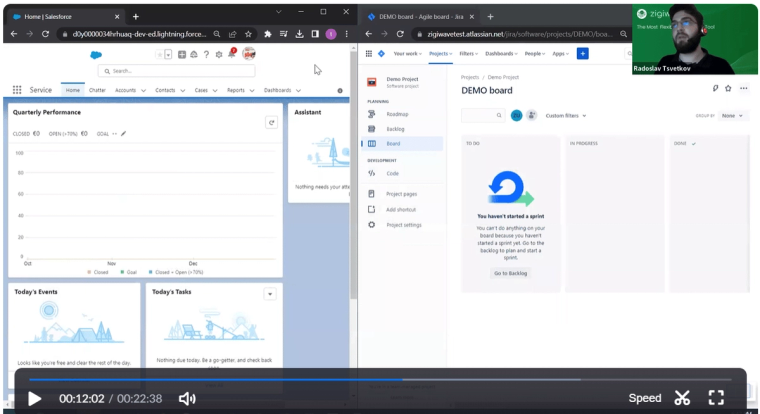
He created a Salesforce case and we saw how a corresponding Jira issue was created in a few seconds, at 13:06.
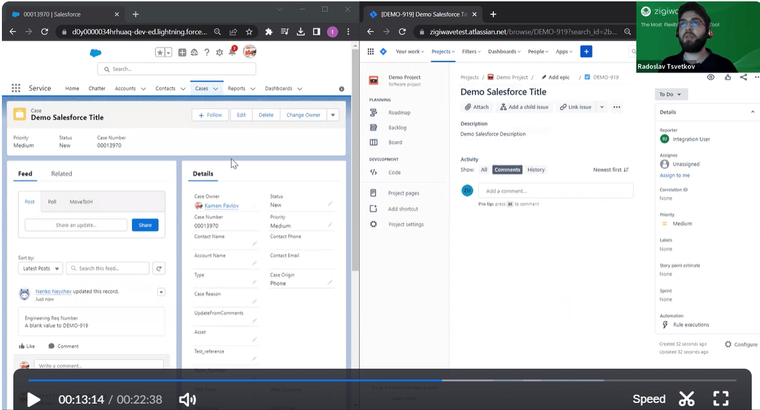
From 13:21 Radoslav showed some two-way updates. He updated the titles and descriptions, added comments and attachments to both the Salesforce case and the Jira issue, as well as changed the statuses.
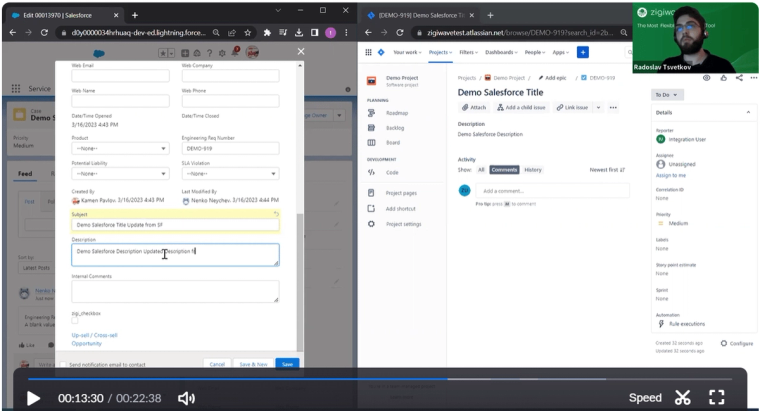
We saw how the changes were updated in both directions in a few seconds.
This concluded the demo, and from 15:18 we started our Q&A session.